



Peter Thul on WRC’s Next Era: Saudi Finale, Ogier’s Ninth Title, and the Road to WRC 27
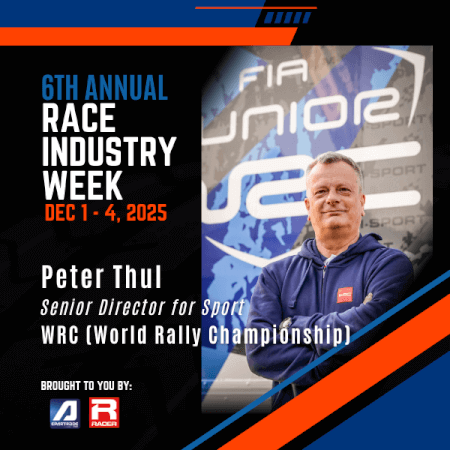
The 2025 FIA World Rally Championship season had barely finished when Peter Thul – two-time German National Co-Driver Champion and WRC Promoter – joined Race Industry Week to unpack one of the series’ most consequential seasons yet and outline a bold future built around new technical regulations, new markets, and a more sustainable business model for teams and manufacturers.
Fresh off the debut season finale in Saudi Arabia, Thul reflected on a championship that went down to the final stage, Sébastien Ogier’s historic ninth world title, and the coming transition from Rally1 to the new WRC 27 regulations that aim to dramatically reduce costs and open the door to more brands, tuners, and customer teams worldwide.
A Dusty, Dramatic Finale in Saudi Arabia
Speaking just “48 hours after the 2025 season finished,” Thul joked that he had “just got the dust off [his] clothes” after a punishing Saudi Arabian debut event that doubled as a season finale and title decider.
The rally, which finished on Saturday out of respect for Sunday being a working day in Saudi Arabia, was a step into the unknown for the championship – and an immediate hit.
Thul described it as “a thrilling event up to the last stage, a proper championship decider and a very tough rally… even tougher than Safari Rally Kenya.”
For a first-time WRC event, Thul called it “really a great event” and suggested that with a few adjustments it could be a perfect long-term season finale.
Ogier’s Ninth Crown: Killer Instinct and Calculated Risk
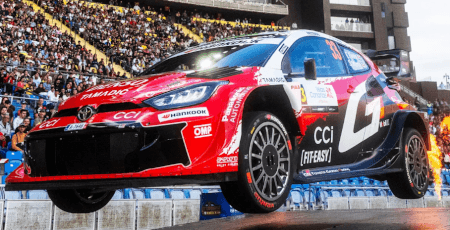
The Saudi finale also sealed history for Sébastien Ogier, who claimed his ninth drivers’ title, equalling the legendary Sébastien Loeb.
What made 2025 especially remarkable is that Ogier started just 11 rallies, compared to 14 for his chief rivals Elfyn Evans and Kalle Rovanperä.
Ogier opened his campaign with another victory at Rallye Monte-Carlo, added key wins including Portugal, and initially told Thul he had no intention of chasing the title. That changed mid-season.
In Paraguay, after losing key points in a rain-affected Power Stage, Ogier’s mindset shifted dramatically.
“He was furious… and then he said, I will win this championship,” Thul recalled. “His killer instinct is huge. He went flat out until the very last meters. It could have ended with the car on its roof or with a puncture – but it didn’t.”
Thul also expressed sympathy and respect for Elfyn Evans, who he felt suffered from significant bad luck and is “well-deserving” of a future title.
For organizers, the outcome was ideal: for the second year in a row, the title was decided on the final stage of the final rally, keeping the drama alive to the very end.
2026: Farewell Season for Rally1 and a Strategic Calendar
Looking ahead, Thul noted that 2026 will be the final year of Rally1 as the headlining WRC class, with a carefully structured calendar designed by colleague Simon Larkin.
Key strategic moves include:
- Japan moving earlier in the year
- Sardinia being pushed later in the season
- Room being created for new events, with the USA explicitly in the frame
- A continued push into Asian markets
While there is interest in modestly expanding beyond 14 events, Thul stressed that WRC must remain realistic about logistics and avoid a Formula 1–style 24+ race schedule.
Thul made it clear that although he “loves” the current Rally1 cars – calling them spectacular – the cost reality is unavoidable.
“Average cost per rally for one Rally1 car is around €1 million,” he said. “We tried to bring in a new manufacturer under the current regulations and it simply didn’t work. It’s just too expensive now.”
At the same time, the wider automotive world has shifted rapidly between all-electric, hybrid and advanced combustion. WRC has already committed to 100% sustainable fuel since 2022, and the new regulations are designed to fit this evolving landscape while protecting the sport’s future.
WRC 27 Regulations: Lower Costs, Same DNA
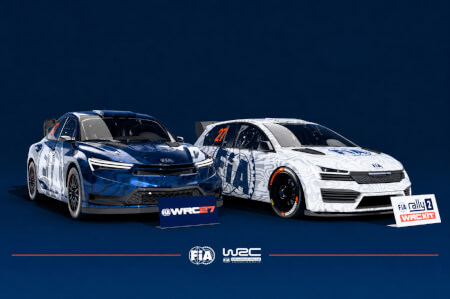
From 2027, the championship will move to the new WRC 27 car, built on an evolution of the proven Rally2 platform and a more flexible tubular frame concept.
The goal is clear and dramatic:
- Rally1 average cost per rally: ~€1,000,000
- Target cost for a WRC 27 car: €345,000
Thul explained that this is feasible because the WRC 27 concept is built around:
- The existing global Rally2 formula, with about 2,000 cars already sold
- Standard components and tighter cost control
- A tubular safety cell similar to Rally1 for top-level safety and body flexibility
- A move to double wishbone suspension (versus McPherson in Rally2)
- Shared engine and gearbox architecture with Rally2
The tubular frame is particularly important for safety and manufacturer flexibility: it allows different body styles, including small SUVs, to be adapted onto the same underlying cell, as B-segment hatchbacks gradually disappear from manufacturer lineups.
The FIA’s task, Thul said, will be to balance performance between WRC 27 and Rally2 without resorting to unpopular “Balance of Performance” style measures.
He noted FIA Technical Director Xavier Mestelan-Pinon’s view that any adjustment will be done “with weight,” not artificial performance manipulation.
Thul expects 2027 to be a transition year, with WRC 27 cars and Rally2 running side by side, but believes 2028 and beyond will bring a major expansion in the top category.
Manufacturers, Tuners and a Bigger Ecosystem
The new regulations are explicitly designed to welcome:
- Existing WRC manufacturers such as Toyota and Hyundai
- Strong customer brands like Škoda
- The returning Lancia Rally2 program
- Long-term players like M-Sport (Ford)
- And, critically, tuners and independent constructors
Under the WRC 27 framework, a tuner can:
- Take the underpinnings from a single manufacturer
- Add their own bodywork and brand identity
- Build a small batch of cars (e.g. 10)
- Get them homologated and compete at the highest level
That opens the door for operations like Prodrive or Vermont SportsCar to create Subaru-branded WRC machines again, using a common base but unique bodywork – exactly the type of model Thul says the FIA is aiming at.
“This is a good story for the future,” he said. “If a manufacturer decides to move out, it’s not such a drama. Others can come in, and tuners can also homologate cars.”
Thul sees clear potential not just for European and Japanese brands, but also for Chinese manufacturers down the road, noting activity from groups like Geely and BYD in other categories.
A Pathway from WRC to ERC and National Championships
Thul expects the new WRC 27 cars to gradually filter down into:
- The European Rally Championship (ERC)
- Leading national championships
- And regional series, much like Group A cars did in their heyday.
He predicts:
- 2027: focus on getting WRC 27 established at world level, with Rally2 still heavily present
- 2028–2029: broader rollout of WRC 27 cars to customer teams in ERC and national series, without strict limitations
The early response from manufacturers is promising. At a recent customer day, Lancia reportedly signed 33 contracts in a single day for its new Rally2-based program, illustrating the commercial power of a car that can be sold globally, not just run as an expensive factory-only prototype.
By contrast, Thul noted, Rally1 hybrid cars were hard to commercialize: every customer program required engineers and complex support, making it “too complicated and too expensive” for most private teams. WRC 27 is designed to reset that equation.
Rally USA: From Vision to Test Event
For North America, the headline topic was Rally USA – a question that has become something of an annual tradition at Race Industry Week.
Thul confirmed that:
- A test event is planned for next year
- If it meets FIA requirements and the concept proves out, Rally USA could join the WRC calendar in 2027
- It is being viewed as a potential 15th event, complementing the core 14-round structure
He emphasized that the goal is not just to “drop in” a world championship round, but to integrate with the American Rally Association (ARA) and build a sustainable ecosystem.
With North American and US-based talents emerging, and Rally2 cars slowly entering the ARA field, WRC 27 would give teams like Subaru USA and others a clear pathway to run one core car in both national and world-level events.
The vision, Thul explained, mirrors WRC’s approach elsewhere:
- Saudi Arabia is designed not only as Rally Saudi, but to ignite the Middle East Rally Championship
- The Chile–Paraguay double-header supports regional growth in South America
- Rally USA would play a similar catalytic role in North America
A Smart Regulation Base for the Next 10 Years
Ultimately, Thul is optimistic that the WRC 27 regulations will give the championship:
- A solid 10-year technical base
- Flexibility to accommodate combustion with sustainable fuel, hybrid, or even full-electric powertrains in future
- A more sustainable cost structure
- And a wider, more diverse field of manufacturers, tuners and customer teams
“The basis is there,” he said. “FIA has done a very good job, together with the manufacturers. I’m really confident this will pay off in the future.”
For now, though, there’s a more immediate focus: laundry, logistics, and the short break before the championship restarts.
With just seven weeks until Rallye Monte-Carlo, the WRC paddock is already preparing for:
- A final farewell season for Rally1 in 2026, and
- The start of a new chapter that promises to reshape the top level of rallying from 2027 onwards.