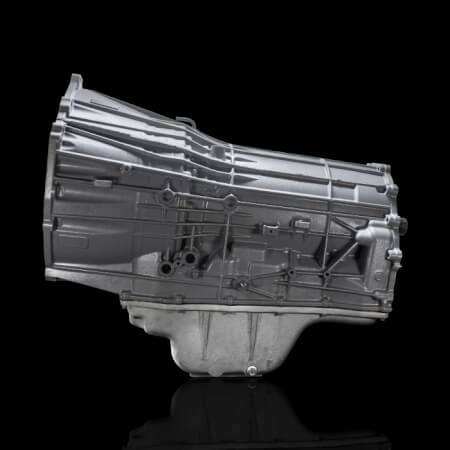
Tech Tips: What 2,000 Horsepower Race Cars Taught Us About Stock Diesel Truck Transmissions
Most people assume the transmission inside a 2,000-horsepower drag car has very little in common with the one behind a stock Duramax pickup towing a fifth-wheel camper.
Our experience has proven otherwise.
In 2018, SunCoast Performance recognized that 10-speed transmissions would define the next generation of performance and heavy-duty trucks. Rather than waiting for failures to appear in the field, we invested in eight new 10-speed development vehicles representing both Ford and General Motors platforms.
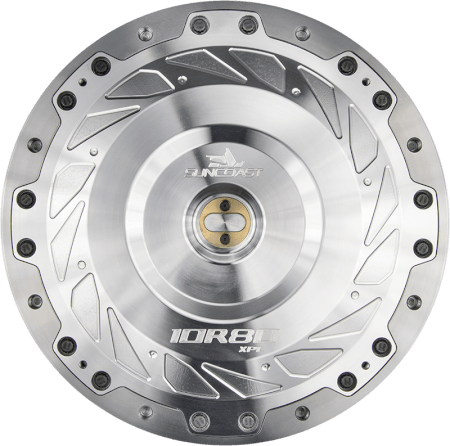
At the same time, SunCoast developed the NMRA 8.60 class around the Ford 10R80 transmission, fielding four full-time sponsored race cars producing well over 1,500 horsepower. While these cars lived on the drag strip, they became some of the most valuable engineering tools we've ever owned.
When we began tearing these transmissions apart after hundreds of passes, we expected race-only failures. Instead, we discovered something much more interesting.
The exact same components showing distress in our race transmissions were the same components we later found wearing prematurely inside 100,000-mile diesel trucks.The horsepower was different.
The application was different.
The failure mechanisms were identical.
That's because automatic transmissions don't fail from horsepower alone. They fail from heat, clutch energy, and fatigue.
Whether the torque comes from a drag strip launch or a trailer climbing a six-percent grade, every clutch application creates friction. Every fraction of a second a clutch spends slipping generates heat. Multiply that by hundreds of thousands of shift events, and the weak links begin to reveal themselves.
The Allison-branded 10L1000 found behind the Duramax is an incredibly sophisticated transmission. Its shift quality and torque converter control are among the best we've seen in a production heavy-duty truck. However, like every modern transmission, it was calibrated to balance durability, efficiency, fuel economy, and driver comfort.When towing beyond factory expectations, increasing engine output, or operating under sustained heavy loads, those same calibrations can expose limitations.
One area we repeatedly identified was clutch capacity and apply stability within the E-clutch assembly. Increasing clutch count alone wasn't enough. We found piston deflection under elevated load created uneven apply forces across the clutch pack, concentrating heat and accelerating wear. Our solution combined a 29 percent increase in clutch capacity with a billet apply piston designed to eliminate deflection while replacing the factory cast-aluminum clutch engagement surface with hardened 4140 steel dowels for improved durability.
Hydraulic efficiency proved equally important.
Many assume the answer is simply increasing line pressure. In reality, excessive pressure without proper hydraulic management often creates new problems. Our engineering focused on reducing clutch apply time, increasing torque converter clutch holding capacity, improving lubrication flow, and optimizing regulator valve operation so the clutches spend less time slipping and more time fully applied. Less slip means less heat, and less heat means longer clutch life. Perhaps the biggest lesson racing taught us is that race cars don't create different failures—they simply accelerate them.
A diesel work truck may require 150,000 miles to expose a weak component. A 2,000-horsepower race car may reveal that same weakness in a single weekend. Racing compresses years of fatigue into days, allowing engineers to identify failure modes, validate improvements, and apply those lessons directly to heavy-duty trucks.
At SunCoast Performance, that's exactly how we approach transmission engineering. We don't build components simply because they're stronger. We study why parts fail, engineer solutions to address the root cause, and validate those solutions in the harshest environments imaginable.Whether it's a race car chasing an 8.60-second pass or a Duramax pulling a trailer across the country, the physics never change.
And neither does good engineering.
By Blake Carter President of Sales & Marketing SunCoast Performance
We use cookies to improve your experience on our website and to analyze our website traffic. By browsing our website, you consent to our use of cookies and other tracking technologies.